
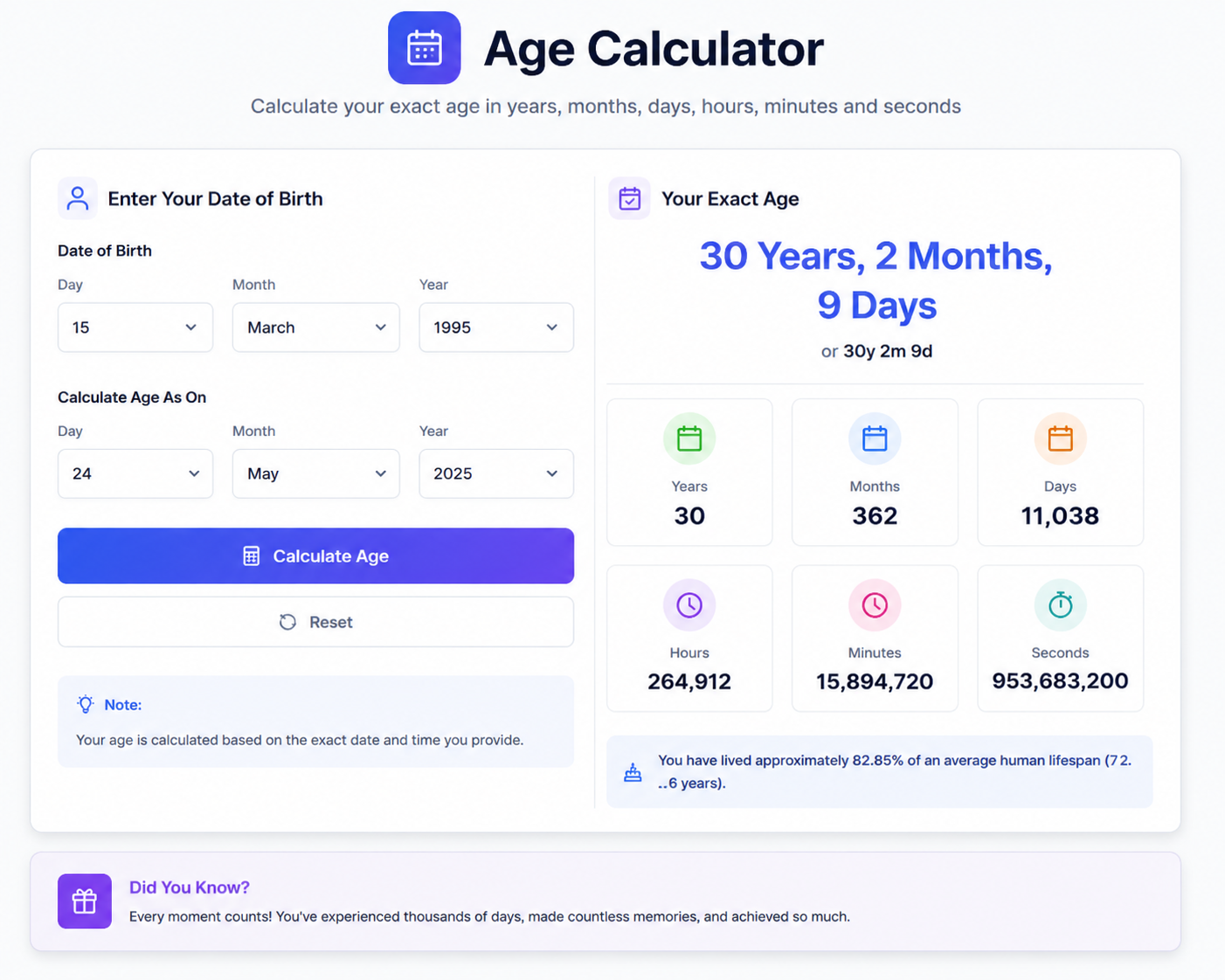

Most people think of an age calculator as a novelty — something you use once to find out how many days you’ve been alive, then forget about. In reality, exact age comes up far more often than people expect, and getting it precisely right actually matters in some of these situations.
- School and daycare enrollment cutoffs.
Many school districts have hard age cutoffs — a child needs to be a certain age by a specific date to enroll in a given grade. A few days on either side of that cutoff can change which year a child starts school, so parents often need to calculate exact age as of a specific future date, not just “how old is my kid right now.” [ Age Calculator] - Retirement and pension eligibility.
Retirement benefits, whether government or private pension plans, are frequently tied to hitting an exact age — not just a birth year. Knowing precisely when you’ll turn the required age, down to the date, matters when you’re planning around it. - Legal age verification for contracts or licenses.
Certain legal processes require confirming someone has passed a specific age threshold as of a signing date or application date — not “roughly” old enough, but verifiably so. - Life insurance and health assessments.
Insurance premiums and eligibility for certain health programs are often calculated based on exact age at the time of application, which can shift your rate depending on whether your birthday has passed yet that year. - Immigration and visa applications.
Many visa categories have age-based eligibility windows — applying a few weeks before or after a birthday can change which category someone qualifies under. - Calculating someone’s age at a historical event.
Genealogy research, biography writing or just settling a family debate about how old a relative was during a specific event often requires calculating age as of past date rather than today. - Determining age difference between two people precisely.
Beyond just “who’s older,” knowing the exact year-month-day gap between two people’s ages comes up in family planning, insurance calculations, and even some legal contexts around guardianship.
The common thread in all of these: “about 30 years old” isn’t precise enough when something official is on the line. That’s really the difference between a fun fact and a number that actually needs to hold up.
